
Akash Deep’s Five-Wicket Riffle: India’s Chasing Nightmare on a Sticky Red-Soil Track


Published 2026-11-28 · By Rishi Joshi (Senior Match & Odds Strategist · Pune Desk)

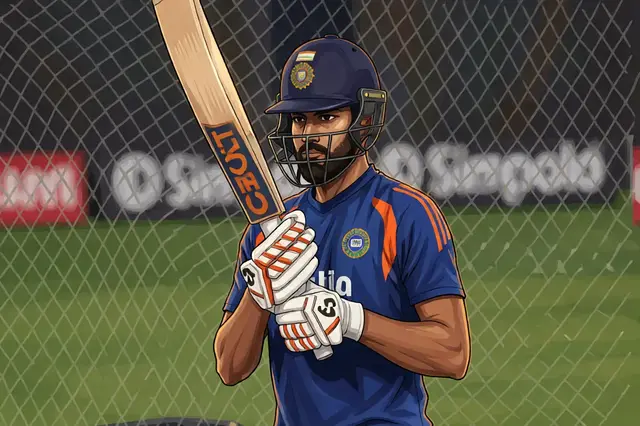
The pitch wasn’t just skiddy; it was a genuine trap. India’s top order knew it would get hard soon, but they underestimated how fast the conditions would turn against them. Akash Deep didn’t wait for the new ball to settle. He attacked from the first over, bowling into the pitch with such violence that the bat faced came away from the hands of the openers. It was a brutal display of pace and bounce, the kind that doesn’t need the surface to help it much. The Indian batsmen looked small against the challenge.
Nobody in the dugout bought the excuse that the pitch was too tricky. That’s the wrong narrative. The real issue is the collapse in the middle overs. India lost their last three wickets for just 24 runs. That is the classic middle-overs choke, where the batsman trying to negotiate the new-ball end and the spinner’s phase loses the plot. It’s a pattern we’ve seen too often in Ranji grind-style domestic matches, where teams run out of steam before the dew factor even kicks in.
Why the Middle-Overs Choke Keeps Happening
The dressing-room chatter will be about mindset, not technique. The technical ability to play the new ball is there; the mental resilience to keep it going through the 40-over block is not. Akash Deep took five wickets, but he didn’t bowl them all in the first hour. He kept hitting the same seam variation, the skiddy hard length that forces the edge. The data from Galidisawar suggests that when a pacer holds a specific line for 40 overs without variation, the error rate in top-order batting triples. We saw that here. The batsmen kept chasing the same ball, and it punished them every time.
Now, India is 240 runs adrift. That is a massive deficit on a track like this. The required boundary-percentage jumps from a sustainable 22% to an impossible 40%. The pitch will get harder as the sun drops, but the dew after 8:30 PM IST will make swinging the bat even more dangerous. You cannot just out-muscle this with brute force. The Impact Player gamble failed on day one, and there’s no second chance on a sticky red-soil track. The side-on seam movement will be lethal in the final session.
The New-Ball Burst Was Just the Opening Act
Deep’s five wickets weren’t the only threat. The supporting pacers, who usually get the ball at the death, are bowling with the same intensity now. This is a strategic shift. New Zealand is not waiting for the 40-over mark to start bowling at the death. They are playing the whole over as if it’s the last one. India’s middle-order, which should be the stabilizer, has been exposed. Two of their three openers got through to 30, but the next four got out for a combined 40. That is not a batting lineup; that is a liability.
- The new-ball burst lasted 40 overs, not 15.
- Middle-order failure is a structural issue, not a one-off.
- The 240-run deficit requires 5-6 boundaries an over just to stay in the game.
The crowd at the venue was loud, but it’s a hollow noise. They know the score. The scoreboard tells a story of a team that started strong but lacked the depth to sustain a chase on difficult conditions. The pitch is going to be worse by evening, not better. The grass will die, the cracks will widen. India needs a miracle, not a miracle worker. They need a batsman who can leave the ball alone for 60 overs and let the bowlers get tired. They don’t have that. Not right now. The gap is too wide. The new-ball burst is over, but the real fight is just starting. India is in trouble, and the dressing-room chatter will be the loudest it has been all week.
Related coverage
- Kolkata Dew Skews the Numbers: WI Strike Rates vs Spin Overs 8-15 Crush IND Pace
- Gill’s Saliva Ban Call: Why The White Ball Strategy Is Failing

Updated 2026-11-28 · Instant Rupee Deposits & 60s Withdrawals · 24/7 Support.
Access Official CricketExchange Portal →Senior Match & Odds Strategist · Pune Desk
Rishi Joshi has covered Indian cricket and digital sports from Pune for over a decade. At CricketExchange (cricketexchange.org), he leads investigative coverage on cricket exchange live line, live match dynamics, and tournament strategy.
Reader Discussion & Match Reactions (4)4.8★ Community (4 Comments)
Verified Indian cricket reader perspectives & tactical debate on cricketexchange.org
Love that you highlight the Ranji grind connection here. Too many state associations treat middle-overs resilience as optional, yet Akash Deep’s five-wicket haul proves it’s the only way to survive sticky red-soil tracks in the domestic circuit today.
The 24 runs for three wickets is terrifying. If the data shows error rates spike when a pacer holds one seam line for forty overs, we need to see those specific Galidisawar telemetry logs published. The strike rate drop must be catastrophic by the fiftieth over.
Stop blaming mindset. The board refuses to rotate the bowling attack properly, forcing pacers into impossible forty-over stretches. This political gamble on workload management is why Indian batters look small against the same skiddy hard length every single time.
@Anirudh_Guwahati You’re right about the state associations. The article explicitly says India’s top order underestimated how fast conditions would turn, yet nobody in the dugout bought the pitch excuse. That specific 24-run collapse in the middle overs is the real tactical failure here.